
Scaling a business today requires more than strong operations. SMBs across the U.S. face rising expectations around speed, security, and customer experience. Many companies explored upcoming tech trends in our previous article, Future Trends in Business Communication Technology, which highlighted how digital tools are reshaping collaboration. Building on those insights, cloud solutions have become a key driver of efficiency and growth for companies that want flexibility without the cost of large in-house IT teams.
Cloud solutions allow small and mid-sized businesses to handle expansion without worrying about infrastructure limits. Instead of buying physical servers or expanding office hardware, companies can scale up or down instantly based on demand. This flexibility helps leadership teams stay focused on service quality while meeting rising customer expectations. It also removes the heavy lifting from your internal staff, which gives you more time to innovate.
For healthcare practices, real estate brokerages, and professional service companies, cloud adoption supports faster workflows and reduces downtime. These industries often rely on communication, data sharing, and mobility, making cloud-based tools a perfect fit. As more organizations shift to digital operations, cloud solutions provide the foundation needed to remain competitive in a fast-moving market.
How Cloud Solutions Improve Business Scalability
Cloud solutions improve scalability by letting businesses adjust their resources without physical limitations. Instead of relying on fixed hardware, companies can expand storage, processing power, or software access instantly. This makes growth more predictable and manageable. Studies show that 63 percent of SMBs adopting cloud systems experience operational efficiency gains (Statista, 2024). This flexibility puts small teams on the same playing field as larger competitors. The cloud removes traditional bottlenecks and allows teams to stay agile.
Scalability is especially valuable for service-based industries. Real estate brokerages, for example, experience fluctuations in listings, client volume, and agent activity. Cloud-based CRMs allow teams to scale access, automate workflows, and keep client information secure. Healthcare practices also benefit from cloud scalability by managing patient data, telehealth tools, and scheduling software. These workflows become smoother as cloud systems adjust based on patient volume. This helps providers deliver better continuity of care.
Businesses that want predictable growth also benefit from cloud-based cost structures. Traditional servers require large upfront investments and frequent maintenance. Cloud systems operate on subscription or usage-based pricing, making spending easier to forecast. This supports strategic planning and financial management. Companies can budget around growth trends instead of worrying about aging hardware. As a result, decision-makers can redirect funds to marketing, staffing, or product development.
Cloud scalability also supports remote and hybrid work. With distributed teams becoming standard, businesses must keep employees connected and productive. Cloud platforms allow staff to access files, communication tools, and applications from anywhere. This increases efficiency across departments and gives SMBs access to nationwide talent. Remote-ready tools also strengthen business continuity during unexpected disruptions. A scalable cloud environment ensures teams can continue operating without downtime.
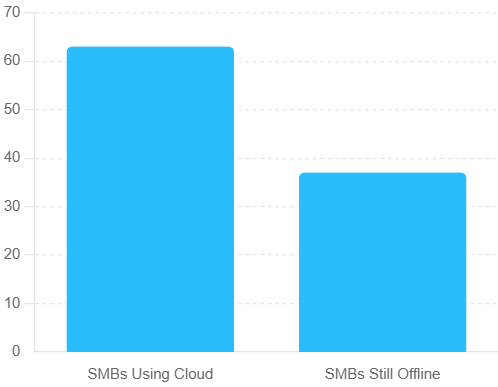
Source: Statista, 2024
Enhancing Security and Stability Through Cloud Platforms
Security remains one of the biggest reasons SMBs migrate to the cloud. Modern cloud platforms offer enterprise-grade protection such as encryption, multi-factor authentication, and real-time threat monitoring. These features help businesses protect sensitive data without needing a full internal IT department. Research shows that 94 percent of companies report improved security after moving to the cloud (Forbes, 2024). This increase in stability helps strengthen trust with customers and business partners.
Cloud-based security also protects businesses against data loss. Traditional systems are vulnerable to physical damage, device theft, and accidental deletion. Cloud platforms store data across distributed servers, ensuring backups remain safe even during local outages. For healthcare providers, this means patient records stay protected during emergencies. Real estate teams also benefit from secure document storage, preventing delays during transactions and client onboarding.
Another security advantage comes from automatic updates. Many SMBs struggle to keep software current due to staff limitations or busy schedules. Cloud services update in the background, which eliminates vulnerabilities caused by outdated systems. This improves compliance with industry standards, especially in sectors like healthcare where regulations require strong data protection. Automatic updates reduce risk and help businesses maintain a professional reputation.
Cloud platforms also promote reliability. Businesses lose money every minute systems go down during operations. Cloud hosting providers offer high uptime guarantees, minimizing the risk of interruptions. Consistent reliability helps service-based businesses maintain smooth operations. Whether a team is scheduling appointments, signing new real estate clients, or delivering online services, cloud platforms ensure the workflow continues without disruption.
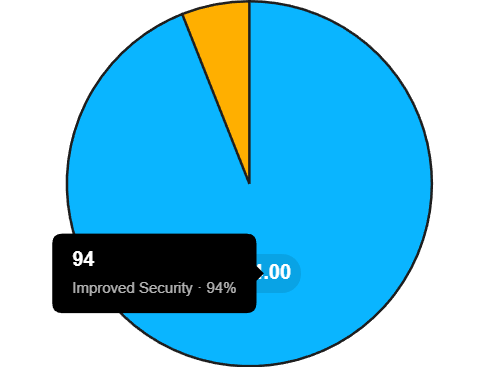
Source: Forbes, 2024
Why Cloud-Based Collaboration Drives Productivity
Cloud collaboration tools help teams work together more effectively, especially in fast-paced environments. Instead of relying on email chains or local files, cloud platforms give employees real-time access to shared documents. This supports quick decision-making, which is essential for SMBs trying to scale. According to Microsoft, collaborative cloud tools can improve team productivity by up to 30 percent (Microsoft, 2024). This gives small teams more room to serve customers efficiently.
Industries that rely heavily on communication gain the most value. Real estate agents can coordinate property, client, and contract updates without delays. Healthcare teams can communicate securely across departments while maintaining HIPAA compliance. Even small office teams benefit from cloud collaboration because it removes barriers tied to location and time. As businesses grow, the need for faster communication becomes essential. Cloud tools help reduce friction and keep processes organized.
Cloud collaboration also supports better version control. Traditional workflows often lead to outdated files or missing attachments. Cloud tools keep records updated automatically, ensuring every team member sees the latest version. This improves accuracy when delivering work to clients. It also eliminates confusion caused by miscommunication. Strong version control is especially important for compliance-heavy industries that need accurate documentation.
Another advantage is seamless integration with other business tools. Cloud collaboration platforms often connect to CRMs, analytics dashboards, accounting software, and marketing systems. This reduces manual work and strengthens automation. SMBs that automate administrative work can redirect time toward client service or strategic planning. As digital tools continue to evolve, cloud ecosystems will become essential for maintaining a competitive edge.
Cloud solutions allow SMBs to grow with confidence, security, and long-term stability. If your business is ready to modernize its operations, explore how Gooey IT can support your digital transformation at https://www.gooeyit.com.
Enhancing Security and Stability Through Cloud Platforms
Security remains one of the biggest reasons SMBs migrate to the cloud. Modern cloud platforms offer enterprise-grade protection such as encryption, multi-factor authentication, and real-time threat monitoring. These features help businesses protect sensitive data without needing a full internal IT department. Research shows that 94 percent of companies report improved security after moving to the cloud (Forbes, 2024). This increase in stability helps strengthen trust with customers and business partners.
Cloud-based security also protects businesses against data loss. Traditional systems are vulnerable to physical damage, device theft, and accidental deletion. Cloud platforms store data across distributed servers, ensuring backups remain safe even during local outages. For healthcare providers, this means patient records stay protected during emergencies. Real estate teams also benefit from secure document storage, preventing delays during transactions and client onboarding.
Another security advantage comes from automatic updates. Many SMBs struggle to keep software current due to staff limitations or busy schedules. Cloud services update in the background, which eliminates vulnerabilities caused by outdated systems. This improves compliance with industry standards, especially in sectors like healthcare where regulations require strong data protection. Automatic updates reduce risk and help businesses maintain a professional reputation.
Cloud platforms also promote reliability. Businesses lose money every minute systems go down during operations. Cloud hosting providers offer high uptime guarantees, minimizing the risk of interruptions. Consistent reliability helps service-based businesses maintain smooth operations. Whether a team is scheduling appointments, signing new real estate clients, or delivering online services, cloud platforms ensure the workflow continues without disruption.
References
Statista. (2024). SMB cloud adoption rates. https://www.statista.com
Forbes. (2024). Cloud migration and security improvements. https://www.forbes.com
Microsoft. (2024). Cloud collaboration productivity data. https://www.microsoft.com
Gooey IT. (2024). Future trends in communication technology. https://gooeyit.com/blog/future-trends-business-communication-technology