
Future Trends in Business Communication Technology
Small and medium-sized businesses (SMBs) across the U.S. are experiencing a communication transformation. For many, the lack of a full in-house IT team makes technology adoption a balancing act—between staying current and staying lean. Whether you manage a healthcare practice, a real estate brokerage, or a service-based company, communication technology is now a central driver of growth.
The shift toward hybrid work and cloud-based systems has made reliable, secure communication essential. According to Statista (2025), more than 60% of U.S. SMBs have adopted or plan to adopt unified communication platforms, recognizing them as key to improving responsiveness and collaboration. As digital maturity grows, the ability to integrate AI, mobile collaboration, and security into daily workflows will define competitive advantage.
Unified Platforms Driving Smarter Collaboration
The communication landscape has evolved from isolated tools into unified ecosystems. Unified Communication as a Service (UCaaS) brings voice, video, chat, and collaboration into one interface. For SMBs, this consolidation simplifies management, enhances productivity, and reduces IT complexity. A 2025 Gartner report highlights that companies using UCaaS experience a 25% increase in team efficiency.
Businesses serving clients nationwide—especially in healthcare and real estate—benefit greatly from consistent communication standards. Unified platforms ensure that every message, meeting, or file exchange happens within a secure, trackable environment. This reduces downtime, minimizes human error, and promotes accountability.
Cost efficiency is another advantage. Rather than paying for multiple subscriptions, SMBs can reduce overhead and centralize billing. Furthermore, modern UCaaS systems offer built-in analytics to track performance, call volume, and service quality. This data-driven visibility allows business owners to make informed IT investment decisions.
The next step for SMBs is strategic integration. By connecting UCaaS with CRM tools, scheduling apps, and customer service workflows, businesses can deliver seamless client experiences. Adopting unified platforms positions your company not just for efficiency but for scalable growth.
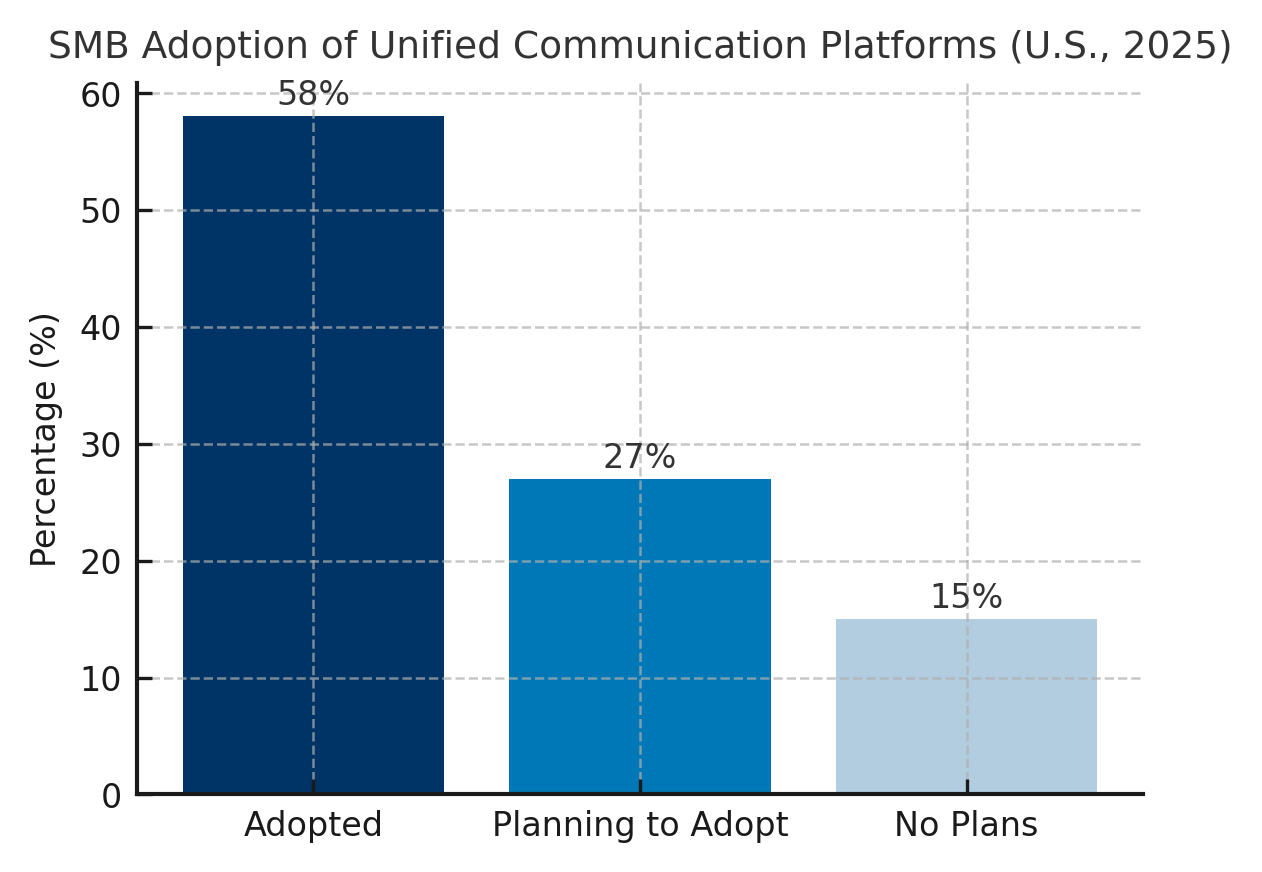
Source: Statista,2025
Artificial Intelligence Enhancing Business Communication
Artificial intelligence (AI) is redefining how businesses communicate internally and externally. From AI-powered chatbots that handle customer queries to automated transcription services that document meetings, AI is saving SMBs time while improving service quality. A Deloitte study (2025) shows that 52% of U.S. SMBs already use some form of AI communication tool.
AI doesn’t replace human connection—it enhances it. Intelligent sentiment analysis tools can detect client frustration or satisfaction in messages, allowing faster, more empathetic responses. For decision-makers, these insights strengthen client relationships and protect brand reputation.
For SMBs with limited staff, automation is crucial. Automated reminders, data summaries, and message routing ensure no client communication is missed. In industries like healthcare, AI transcription and secure messaging systems also support compliance by maintaining accurate communication records.
Adopting AI responsibly means prioritizing transparency and data security. Work with providers that comply with HIPAA, SOC 2, or ISO standards, and train teams on AI best practices to maximize its benefits.
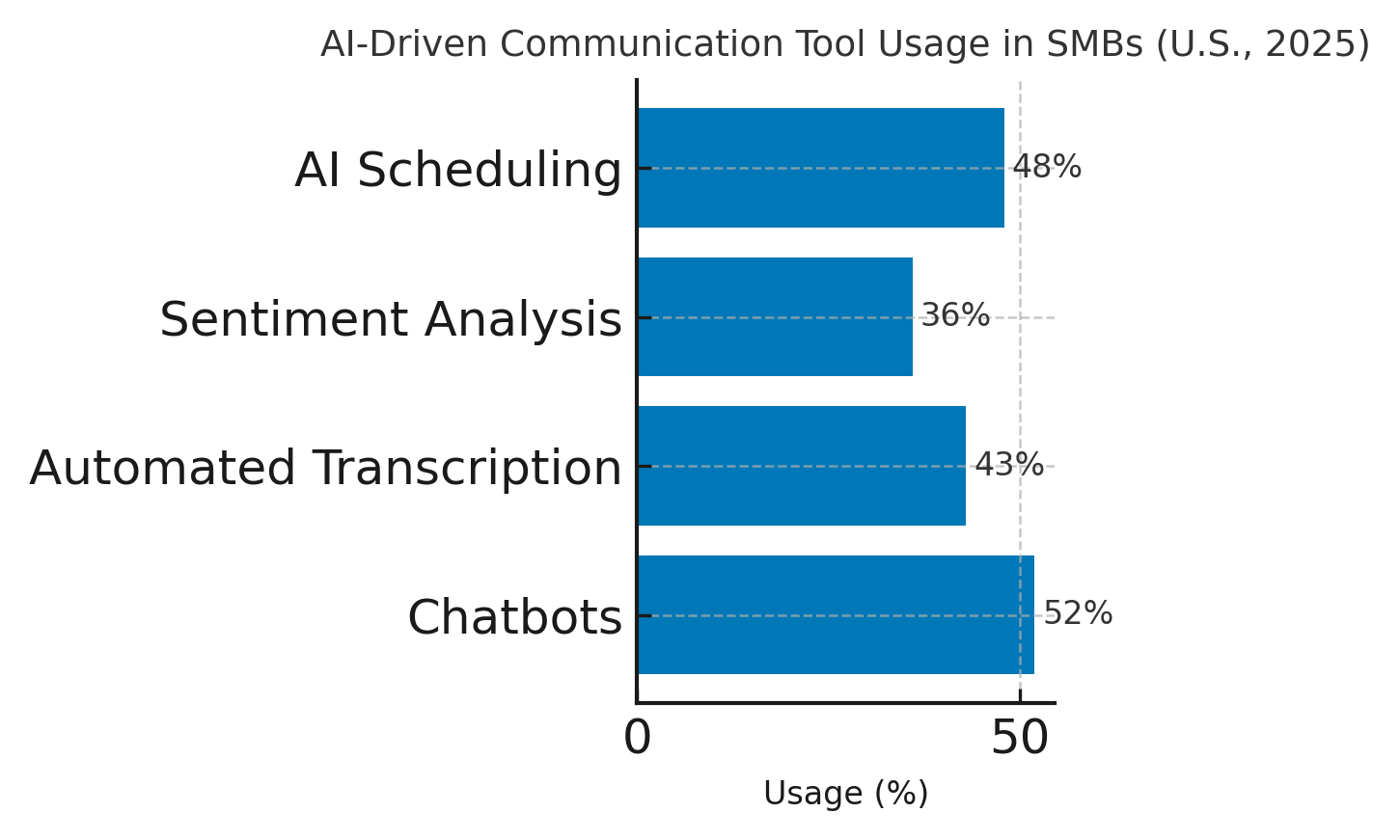
Source: Deloitte, 2025
The Mobile-First Future of Workplace Communication
As remote work continues, mobile collaboration has become non-negotiable. Employees and clients expect access to communication platforms from any device, anywhere. Statista (2025) reports that 64% of healthcare SMBs and 71% of service-based SMBs have adopted mobile collaboration tools to stay connected.
Mobile-first communication tools increase agility and empower on-the-go professionals. Real estate agents, for example, can conduct client meetings and share property data directly from their smartphones. Healthcare practices can coordinate patient updates and telehealth appointments through secure mobile apps.
The key for SMBs is balancing flexibility with control. BYOD (Bring Your Own Device) policies should be paired with mobile device management (MDM) systems that enforce encryption, authentication, and remote wipe.
In 2025 and beyond, the SMBs that invest in mobile collaboration will outperform competitors tied to traditional setups. Mobility doesn’t just enable convenience—it creates a culture of responsiveness and innovation.
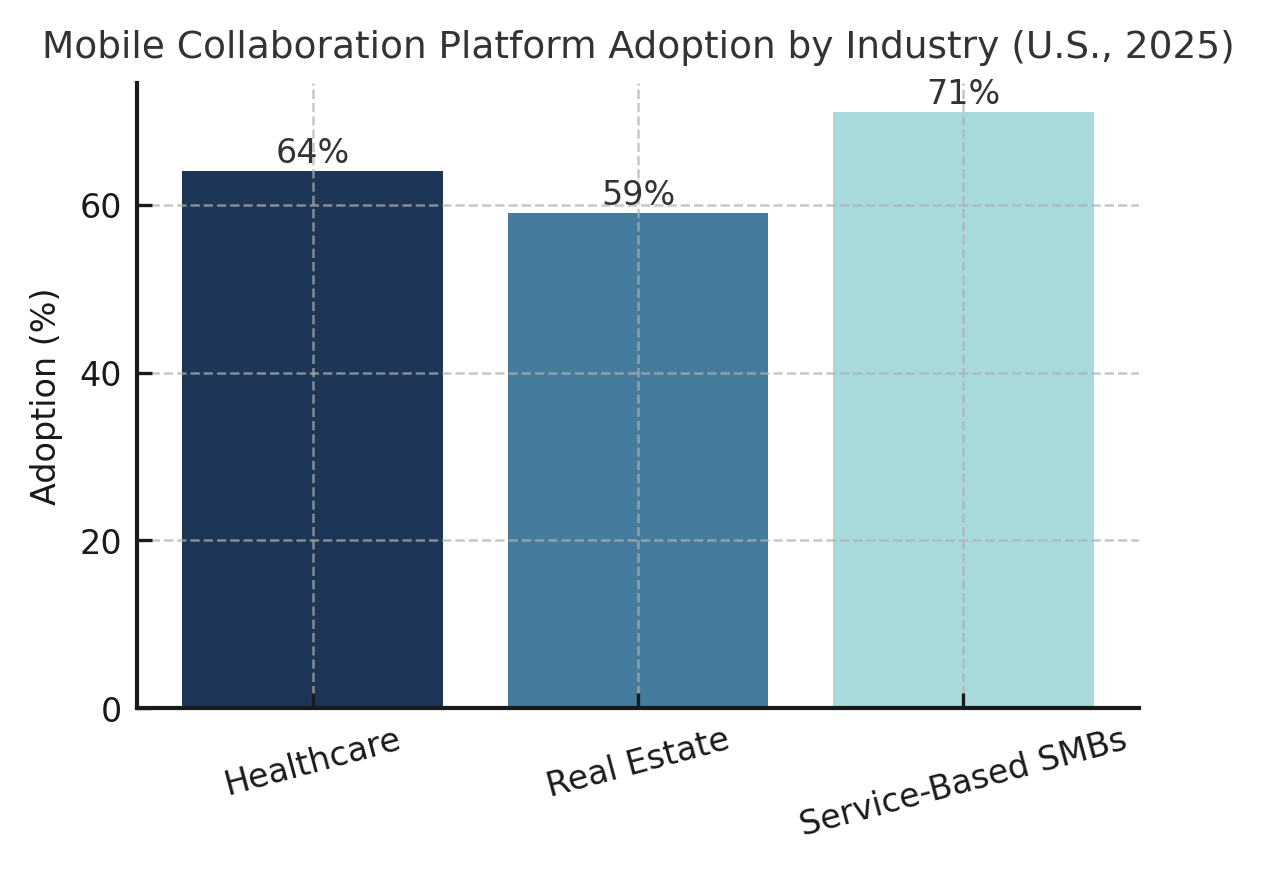
Source: Pew Research, 2025
Adapting Today for Tomorrow’s Communication Landscape
The future of business communication technology is about unifying experiences, enabling mobility, and leveraging AI for efficiency. For SMBs, these trends offer an opportunity to scale sustainably without expanding internal IT staff. By adopting secure, cloud-based systems now, your organization positions itself for resilience and agility.
Working with experienced IT partners can simplify this transition. Gooey IT helps SMBs design, implement, and support integrated communication infrastructures that align with business goals. Learn more about how we support nationwide SMBs at www.gooeyit.com.
The businesses that act today will define the communication standards of tomorrow. With smart investment in technology, your team can stay connected, compliant, and competitive across any industry.
References
-
Statista. (2025). SMB Unified Communications Adoption in the U.S. https://www.statista.com
-
Gartner. (2025). Unified Communication as a Service Report. https://www.gartner.com
-
Deloitte. (2025). AI in SMB Communication Tools. https://www.deloitte.com
-
Pew Research Center. (2025). Mobile Workplace Trends. https://www.pewresearch.org
-
TechRadar. (2025). Digital Transformation in SMB Communication. https://www.techradar.com


.png)