.png)
Business leaders today are surrounded by more data than ever before, yet many small to medium-sized businesses (SMBs) struggle to put that data to work. A healthcare practice may track patient appointments, a real estate brokerage may log client interactions, and service providers may collect customer feedback—but without the right tools, this information remains underutilized. Data is no longer just a back-office record; it is the foundation of smart decision-making.
The challenge lies in transforming raw numbers into actionable insights. That’s where AI-powered analytics makes the difference. By applying machine learning and automation, AI takes complex data streams and translates them into patterns, predictions, and practical steps. For SMBs without full in-house IT teams, leveraging this technology isn’t about adding complexity. It’s about gaining clarity on how to grow smarter and faster.
Turning Raw Data Into Business Intelligence
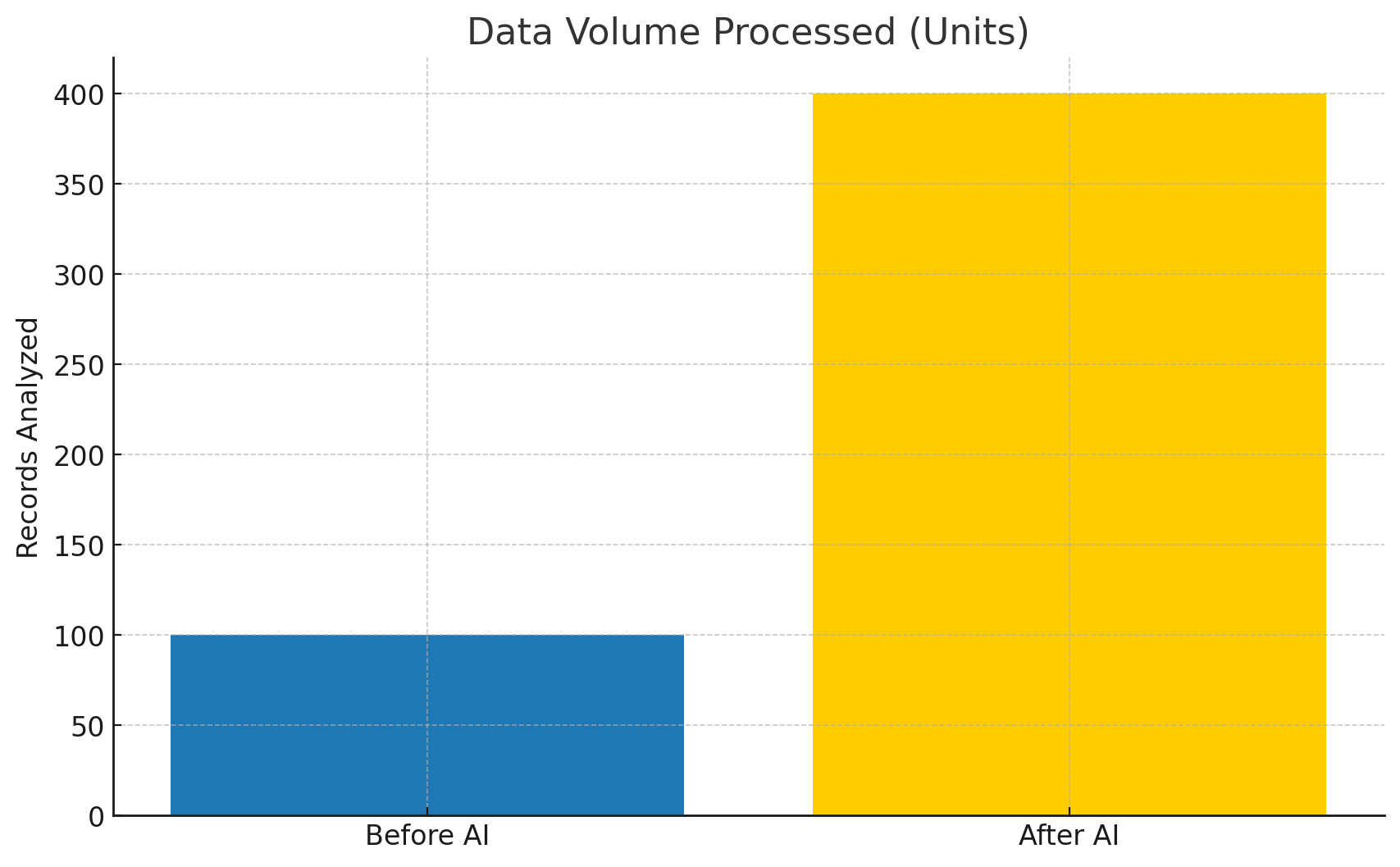
The first advantage of AI analytics is the ability to take massive amounts of raw data and process it in real time. Consider how much information your company generates daily: sales numbers, marketing performance, customer inquiries, and even website activity. For a decision-maker, reviewing this manually is impossible. AI steps in by automating data collection and filtering noise from signals.
For example, a healthcare practice may want to identify peak appointment times. AI systems can scan through thousands of scheduling entries and highlight patterns in seconds. Instead of simply knowing that Tuesdays are busy, you’ll see the exact hours where staff demand spikes. This kind of clarity enables practices to allocate resources more effectively, reducing wait times and improving patient satisfaction.
Real estate firms benefit in similar ways. Imagine tracking which property listings get the most clicks or which neighborhoods generate the most inquiries. AI analytics can show these trends and even predict future interest based on market activity. For service providers, the same process can apply to customer retention, revealing when clients are likely to leave and how to intervene.
When businesses convert raw data into meaningful business intelligence, decision-making becomes proactive rather than reactive. You’re not guessing where growth opportunities lie—you’re identifying them with confidence (Stanford University, 2024).
Forecasting Growth with Predictive Analytics
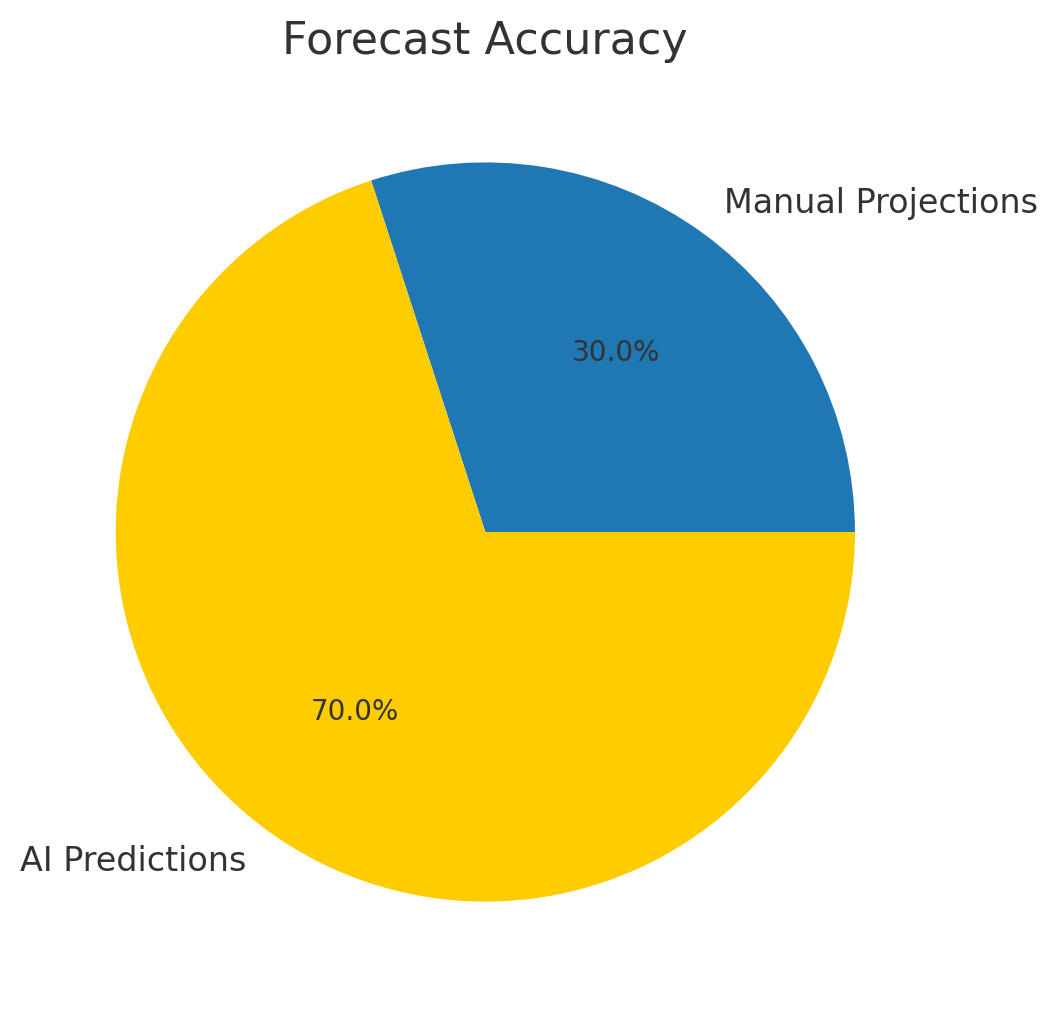
Another powerful capability of AI is predictive analytics. Instead of only analyzing what has already happened, AI models forecast what is likely to happen next. This isn’t speculation; it’s probability built on real patterns (IBM, 2025). For SMBs, forecasting makes it easier to plan budgets, optimize marketing spend, and anticipate customer needs.
Take the example of a service-based company that struggles with seasonal fluctuations. By applying AI, past performance can be analyzed against external data such as local economic conditions or even weather patterns. This allows the business to anticipate demand shifts and prepare resources accordingly. Instead of scrambling during peak seasons, leadership can plan staffing and inventory in advance.
Healthcare practices can benefit by forecasting patient no-shows or cancellations. By knowing which patients are most likely to miss appointments, practices can double-book strategically or implement reminders to reduce gaps. Real estate brokerages might apply predictive analytics to forecast which listings will close faster, helping agents prioritize efforts where they matter most.
This future-facing view of the business allows leaders to grow with fewer surprises.
Enhancing Marketing ROI Through Smarter Targeting
Marketing is one of the biggest areas where SMBs can waste money. Campaigns often run without clear insight into what is working and what isn’t. AI-powered analytics changes this by diving deep into customer behavior. Instead of broad assumptions, businesses can target audiences with precision.
Imagine running digital ads for a healthcare clinic. AI tools can analyze patient demographics, browsing habits, and past interactions to identify the audience most likely to book appointments. Instead of spending broadly, every dollar is directed toward people who match your most valuable profiles. For a real estate brokerage, the same logic applies to targeting potential homebuyers or investors based on online search patterns.
AI also helps measure marketing ROI more effectively. Rather than looking at vanity metrics like clicks, AI systems track full conversion paths. That means you’ll know not only who clicked an ad but who actually became a paying client. Service providers can use this to refine messaging, reallocate ad spend, and test strategies with speed and confidence.
The result is higher efficiency in marketing and lower customer acquisition costs (Deloitte, 2023).
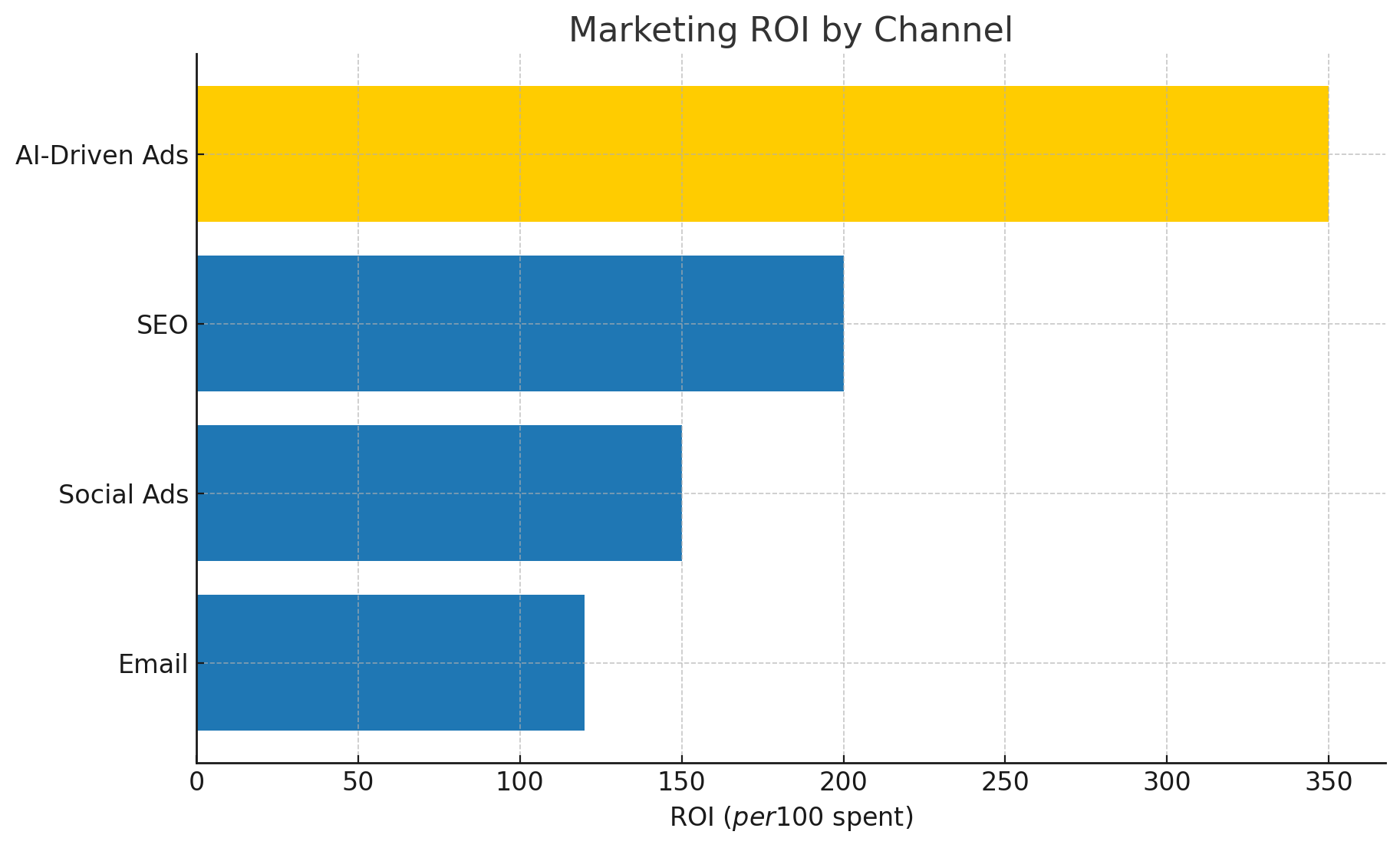
Horizontal bar chart ranking marketing channels by ROI (Illustrative; source: Deloitte, 2023)
Improving Operations and Customer Experience
Beyond marketing and forecasting, AI-powered analytics directly improves day-to-day operations. Operational inefficiencies drain time and resources, but they are often invisible without data. AI can monitor workflows, highlight bottlenecks, and suggest adjustments that lead to measurable improvements (McKinsey & Company, 2023).
For example, a healthcare practice might notice that certain services take longer than expected to process. AI can identify delays at specific points, such as lab result turnaround or patient intake, and propose solutions. This not only saves time but also enhances the patient experience. A smoother process translates into higher satisfaction scores and repeat visits.
In real estate, AI analytics can streamline agent performance tracking. Brokerages can see which team members generate the most leads, close deals faster, or require additional training. This isn’t about micromanagement—it’s about providing support and resources where they make the greatest impact.
For service providers, operational data can show client churn risks. If response times are slipping or recurring clients are cutting back, AI flags this early so leaders can act before contracts are lost. Over time, this proactive approach creates a stronger reputation and higher customer loyalty.
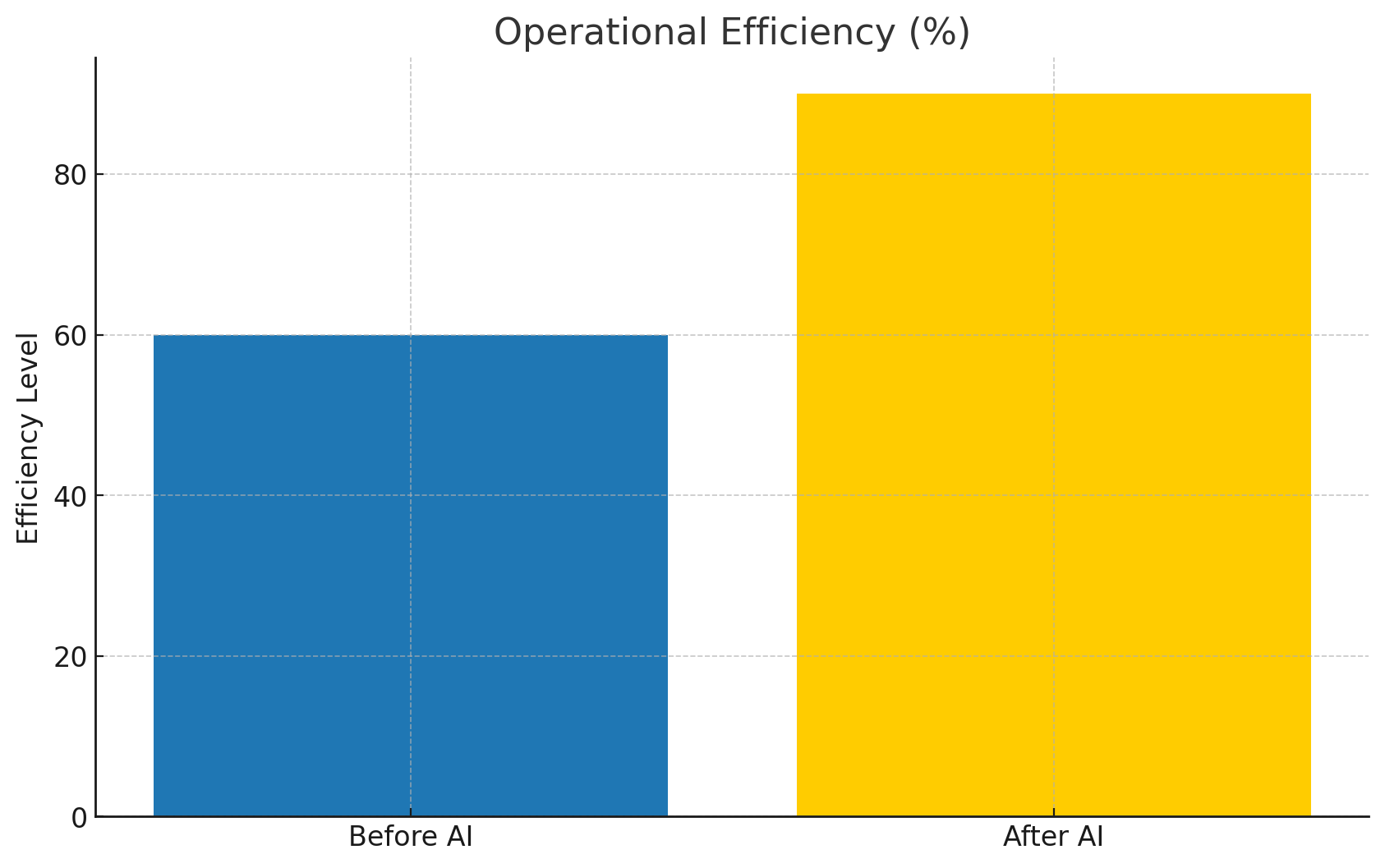
Bar chart comparing before-and-after metrics of operational efficiency (Illustrative; source: McKinsey & Company, 2023)
Why SMBs Can’t Afford to Wait
The value of AI-powered analytics is not limited to large corporations. In fact, SMBs often stand to benefit the most because every efficiency gained has a direct impact on profitability. When smaller teams can leverage the same tools as larger competitors, the playing field becomes more level.
Without adopting these tools, businesses risk being left behind. Competitors using AI will make faster decisions, serve customers better, and adapt quicker to changing market conditions. For healthcare practices, this could mean losing patients to more responsive providers. For real estate firms, it may mean losing listings to more agile brokerages.
The good news is that today’s AI solutions are more accessible than ever. With cloud-based platforms and managed IT services, SMBs don’t need an in-house data science team to take advantage. Companies like Gooey IT help businesses across the U.S. adopt these tools without overwhelming internal staff.
By combining AI analytics with reliable IT support, SMBs create a framework that is both innovative and practical. It is no longer a question of whether AI will be part of your business—it’s whether you’ll use it soon enough to stay ahead (Forbes, 2023).
Moving Forward with Smarter Business Strategy
The path to growth isn’t about adopting every new technology. It’s about choosing the right tools that deliver measurable results. AI-powered analytics is one of those tools, offering clarity where there was once confusion and opportunity where there was once uncertainty.
For business leaders, the first step is simple: start small. Identify one area where data is underused, whether it’s patient scheduling, property marketing, or client retention. Implement AI analytics there, track the results, and expand gradually. This approach reduces risk while building confidence.
Along the way, remember that technology is only as effective as the strategy guiding it. SMBs need partners who not only provide tools but also help interpret the insights and align them with business goals. That’s where professional IT support becomes invaluable.
By making data the foundation of decision-making, SMBs can unlock growth that is both scalable and sustainable. The businesses that act now will be the ones setting the pace for tomorrow.
References
· Deloitte. (2023). AI-powered marketing. Deloitte Insights. https://www2.deloitte.com/us/en/insights/focus/technology-and-the-future-of-marketing/ai-in-marketing.html
· Forbes. (2023). How SMBs can leverage AI to scale. Forbes Technology Council. https://www.forbes.com/sites/forbestechcouncil/2023/03/14/how-smbs-can-leverage-ai-to-scale/
· IBM. (2025). What is predictive analytics? IBM. https://www.ibm.com/topics/predictive-analytics
· McKinsey & Company. (2023). The state of AI in 2023. McKinsey & Company. https://www.mckinsey.com/capabilities/quantumblack/our-insights/the-state-of-ai-in-2023
· Stanford University. (2024). Stanford guidelines for web credibility. Stanford Persuasive Technology Lab. https://credibility.stanford.edu